Every dog owner falls into one of two cleanup camps, and often both at once. There is the walk, where you scoop on the go with a bag in hand under the watchful eye of neighbors, and there is the yard, where waste accumulates on your own turf until you deal with it. The two situations feel similar but they call for genuinely different habits, tools, and etiquette.
Understanding the distinction helps you stop treating them the same way. What works for a quick sidewalk pickup is clumsy in the backyard, and the yard routine that keeps your grass healthy makes no sense on a public trail. This article compares the two head to head so you can handle each one properly instead of forcing one approach onto both.
The Fundamental Difference
On a walk, cleanup is immediate and public. The waste has to come with you, there is no leaving it for later, and social pressure enforces the standard. In the yard, cleanup is deferred and private. Nobody is watching, which means the only thing keeping the yard clean is your own discipline, and that is precisely why yard waste tends to pile up while walk waste rarely does.
Recognizing this psychological gap is the first step. The yard is where good intentions quietly fail, so it needs a system rather than a mood.
Tools for the Walk
Walk cleanup is all about portability and speed. You need bags that are easy to open one-handed, a dispenser that clips to the leash, and ideally a small carrier so you are not holding a full bag for the rest of the loop. The whole kit has to be light and fit in a pocket or hook onto the harness.
The bags themselves are the star here. Thin, cheap ones tear or leak mid-walk, which is a genuinely miserable experience. Carrying a few extra is wise, since you never know when your dog will surprise you twice on one outing.
Tools for the Yard
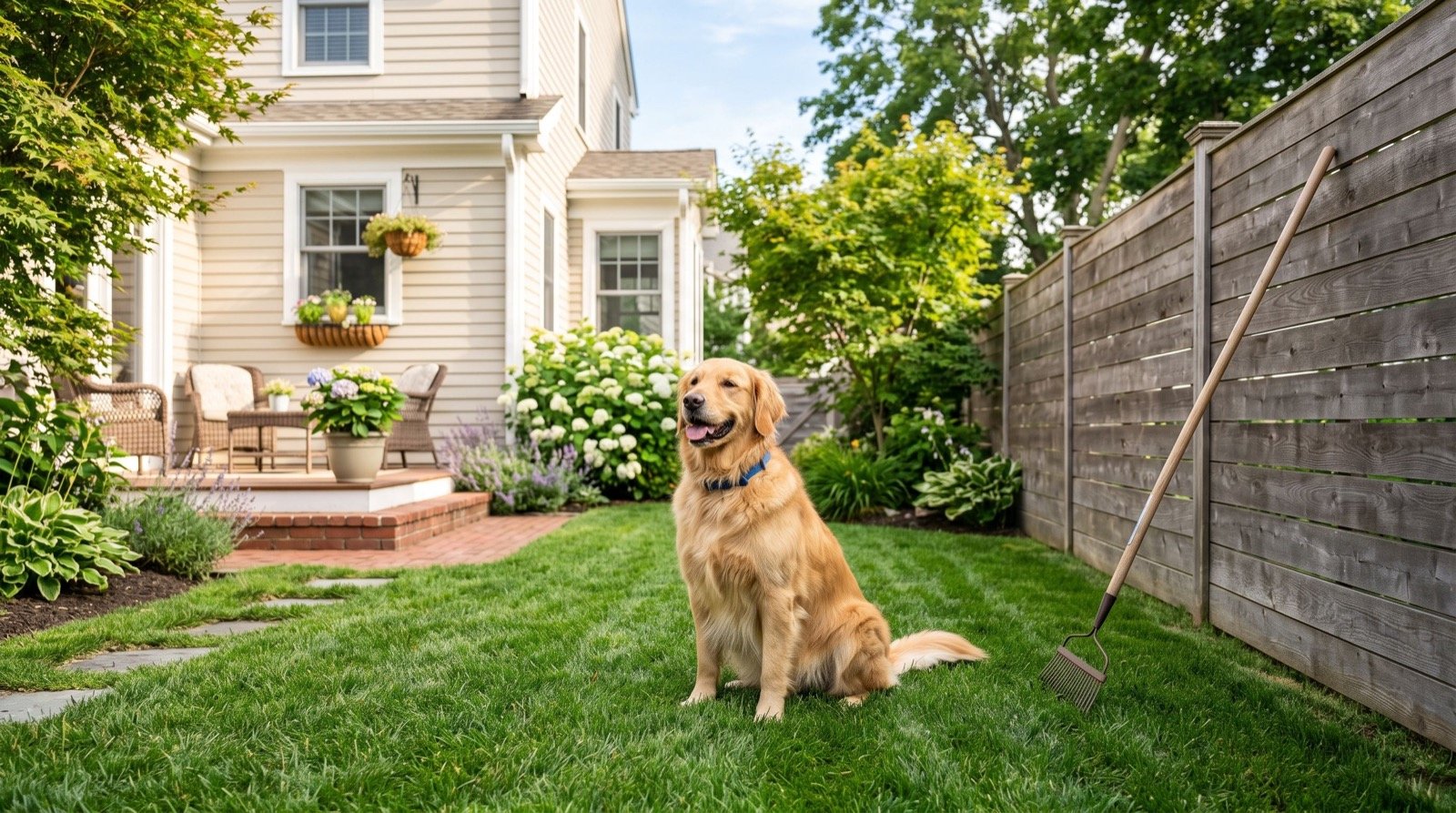
The yard is a different job entirely. Here you are dealing with multiple deposits at once, often on grass, and bending over for each one is a recipe for a sore back and a skipped routine. This is where a long-handled tool changes everything, letting you stand upright and clear the whole yard in one pass. If you have been improvising with a bag and a lot of squatting, searching for a Pooper Scooper nearby is the upgrade that makes yard cleanup actually sustainable.
You also need bulk containment for the yard, not single walk bags. Collecting a few days of waste calls for something with real capacity, and sturdy heavy duty bags keep the whole haul sealed from grass to bin without splitting.
Frequency Expectations
Walk cleanup is by definition immediate, one deposit and it is handled. Yard frequency is where owners get to choose, and the choice matters. Letting yard waste sit for a week means nitrogen burns in the grass, odor builds, and parasites have time to become infective in the soil. A daily or every-other-day sweep keeps all three problems from ever starting.
The trap is assuming the yard can wait because it is out of sight. It cannot, at least not without consequences. Treat the yard sweep as a scheduled task, not a when-I-get-to-it one, and it stays effortless.
Etiquette and Social Rules
Walks come with a social contract. Leaving waste on a sidewalk, a neighbor’s lawn, or a public trail is one of the fastest ways to earn the label of the inconsiderate dog owner, and in many places it carries a fine. Always carry more bags than you think you need, pick up completely, and never assume nobody saw.
The yard has no external etiquette, but it has an internal one. Guests, kids, and the dogs themselves all use that space, and a neglected yard fails them quietly. The standard you hold in public is worth holding at home too, even though no one is enforcing it.
Health Considerations for Each
On walks, the health concern is mostly about shared spaces, since your dog encounters ground other dogs have used and can pick up parasites from waste others left behind. Prompt cleanup protects the next person and their pet as much as it protects your reputation. In the yard, the health concern is concentrated exposure, because it is your family and your dogs living with whatever accumulates day after day.
Both settings reward the same core behavior, remove waste promptly and seal it away, but the yard rewards it more, since that is where the exposure is repeated and personal.
When the Yard Gets Ahead of You
Life happens. A busy stretch, an injury, or a long winter can let the yard slide into a state that is genuinely unpleasant to tackle alone. When that happens, it is entirely reasonable to bring in help to reset it. An experienced local team can clear a badly backed-up yard in a single visit, giving you a clean slate to maintain going forward.
The walk almost never needs outside help, but the yard sometimes does, and that is another way the two situations differ. Know which battle you can fight alone and which one occasionally calls for reinforcements.
Key Takeaways
- Walk cleanup is immediate and public, while yard cleanup is deferred and easy to neglect.
- Walks need portable one-handed bags, yards need long-handled tools and bulk containment.
- Yard waste must be cleared every day or two to prevent lawn burn, odor, and parasites.
- Always carry extra bags on walks and pick up completely to meet basic etiquette.
- A neglected yard can justify a professional reset before you resume a daily routine.
Two Jobs, One Standard
The walk and the yard are not the same task, and treating them identically is why one of them usually suffers. Give each the tools and cadence it actually needs, hold the same standard of prompt, complete cleanup in both, and neither one will get away from you. Do that consistently and your dog gets clean spaces to enjoy in every direction, whether you are three blocks from home or standing in your own backyard.