
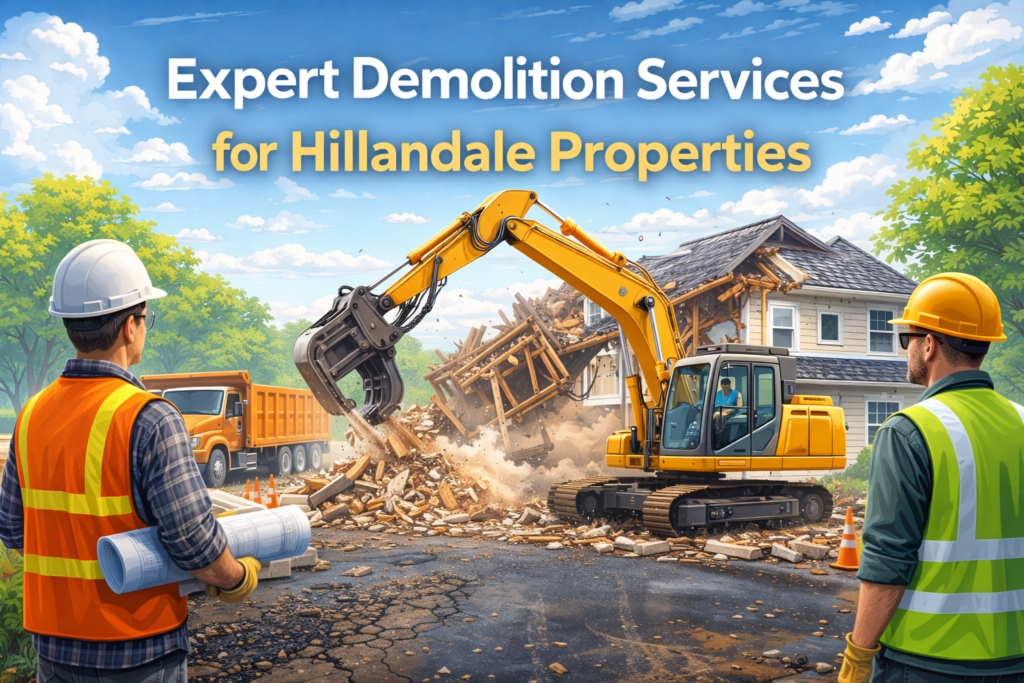
Hillandale’s established residential character and evolving development landscape create diverse demolition needs for property owners navigating renovation projects, site clearance, and construction preparation. This Oregon City neighborhood, with its mix of established homes and properties ripe for improvement, presents unique challenges requiring professional demolition expertise that goes far beyond simply knocking structures down. Whether clearing an aging outbuilding, preparing a site for new construction, removing deteriorated additions, or handling selective interior demolition for renovation projects, understanding professional services helps Hillandale property owners achieve project goals safely, efficiently, and cost-effectively.
Quality demolition work represents critical foundation for successful construction projects—literally and figuratively. Improperly executed demolition creates safety hazards, generates unexpected complications for subsequent construction, and often costs far more through remediation than professional services would have initially. Professional demolition contractors bring specialized knowledge, appropriate equipment, regulatory compliance expertise, and responsible waste management that protects property owners from the costly mistakes that plague amateur attempts or unqualified operators.
Understanding Hillandale’s Demolition Environment
Oregon City’s regulatory framework governs demolition activities through building permits, environmental requirements, and disposal regulations that property owners must navigate carefully. The city requires permits for most significant demolition work, with applications requiring documentation about existing structures, disposal plans, and utility disconnection confirmation. Professional contractors understand these requirements thoroughly, managing permit processes that protect property owners from violations carrying substantial fines and project delays.
Hillandale’s established development means many properties contain older structures with materials requiring special handling during demolition. Homes built before 1980 commonly contain asbestos in insulation, floor tiles, ceiling materials, and other components. Properties constructed before 1978 may contain lead-based paint. These hazardous materials require testing, proper abatement procedures, and regulated disposal before demolition proceeds—requirements that add cost and time but protect workers, future occupants, and the surrounding community from serious health hazards.
Pacific Northwest weather patterns significantly affect demolition scheduling and execution. Oregon’s rainy season creates challenging conditions for site work—saturated soils complicate equipment operation, erosion control becomes critical, and material handling grows more complex. Experienced local contractors understand seasonal timing considerations, scheduling work during favorable weather windows when possible while implementing appropriate measures managing unavoidable wet-weather work. This weather awareness prevents the site problems that cost significantly more than proper planning.
The neighborhood’s mature trees represent both valued assets and potential complications during demolition projects. Oregon City enforces tree protection regulations preserving significant trees during construction and demolition activities. Professional contractors understand these regulations, planning work that achieves project objectives while protecting trees required to remain. When tree removal becomes necessary, they coordinate proper permitting and responsible disposal or recycling of wood materials.
Comprehensive Demolition Services for Every Project Type
Complete structure demolition addresses properties requiring total removal—deteriorated homes, condemned buildings, obsolete commercial structures, or sites being cleared for new construction. This comprehensive service involves utility disconnection coordination, hazardous material abatement when present, systematic structure removal, foundation demolition or preservation based on project requirements, and complete debris removal and site preparation. Professional execution leaves sites ready for immediate construction activity without the cleanup complications that plague poorly managed demolitions.
Selective demolition preserves specified structural elements while removing designated components—an approach particularly valuable for renovation projects transforming existing buildings. Contractors remove targeted walls, floors, ceilings, or additions while carefully protecting structural systems, utilities, and finishes meant to remain. This precise work requires more skill than complete demolition, demanding thorough planning and experienced crews that understand structural systems and can work carefully in confined spaces.
Interior demolition prepares existing buildings for renovation without affecting exterior structure or building envelope. Removing outdated kitchens, bathrooms, or commercial spaces creates clean slates for modern improvements while preserving buildings’ structural integrity and weather-tight envelopes. Professional interior demolition protects adjacent finishes, manages dust and debris carefully, and sequences work to maintain building functionality during phased renovation projects.
Outbuilding and structure removal addresses detached garages, sheds, barns, greenhouses, and other secondary structures that have outlived their usefulness or require clearing for property improvement. These projects vary from simple shed removal to complex multi-structure clearances requiring careful sequencing and equipment selection. Professional services handle all aspects from permit acquisition through debris disposal, leaving properties improved without the complications that DIY removal often creates.
Concrete and hardscape demolition removes driveways, patios, walkways, retaining walls, and other hardscape elements requiring replacement or elimination. This work demands appropriate equipment for concrete breaking, removal, and transportation while protecting adjacent structures and landscaping. Professional contractors recycle concrete when possible, diverting material from landfills while reducing project costs through avoided disposal fees.
The Critical Importance of Hazardous Material Management
Asbestos represents the most significant hazardous material concern in Hillandale’s older building stock. This naturally occurring mineral was used extensively in construction materials through the 1970s due to its fire resistance and insulating properties. When materials containing asbestos become disturbed during demolition, microscopic fibers become airborne and represent serious inhalation hazards causing mesothelioma, lung cancer, and asbestosis. Oregon regulations require licensed asbestos inspectors to survey structures before demolition, with abatement by certified contractors before work proceeds.
Lead-based paint presents similar management requirements in pre-1978 structures. Disturbing lead paint during demolition creates dust and debris requiring specific handling procedures protecting workers and preventing environmental contamination. Oregon’s lead renovation, repair, and painting rules govern work in residential properties, requiring certified contractors and specific work practices. Professional demolition contractors either hold appropriate certifications or coordinate with qualified abatement specialists ensuring compliant, safe handling.
Underground storage tanks occasionally appear during site preparation on older properties—remnants of former heating oil systems or commercial fuel storage. Oregon’s Department of Environmental Quality regulates underground storage tank discovery, removal, and associated soil contamination. Professional contractors recognize warning signs suggesting buried tanks, halt work when discovered, and coordinate appropriate environmental response rather than proceeding in ways that increase contamination and multiply remediation costs.
Other regulated materials appear less frequently but require professional recognition and handling. PCBs in older electrical equipment, mercury in thermostats and fluorescent lighting, refrigerants in HVAC systems, and various chemicals stored in commercial properties all require specific handling procedures. Professional demolition contractors inventory potential hazardous materials during project planning, ensuring appropriate management that protects workers, future occupants, and the environment.
Safety Standards That Protect Everyone
Demolition work consistently ranks among construction’s most hazardous activities. Structural instability during demolition creates collapse risks that can injure workers and bystanders. Falling debris endangers adjacent properties and public spaces. Dust and airborne particles create respiratory hazards. Utility strikes cause electrocutions, gas fires, or water main breaks. Professional demolition contractors implement comprehensive safety programs addressing every identified hazard before and during work.
Oregon OSHA regulations establish specific requirements for demolition operations including engineering surveys assessing structural stability, utility disconnection verification, and fall protection. Competent persons must evaluate conditions before work begins and continuously throughout projects. Professional contractors maintain OSHA compliance documentation, conduct regular safety training, and implement site-specific safety plans addressing unique project hazards. This commitment protects workers while minimizing liability exposure for property owners who could share responsibility for safety violations.
Neighboring property protection represents an ethical and legal obligation during demolition. Professional contractors establish physical barriers preventing debris from affecting adjacent properties. They implement dust control measures through water application and enclosures. They schedule work respecting noise ordinance restrictions and community quality of life. They communicate proactively with neighbors about project timelines and potential impacts. These practices demonstrate professional responsibility while maintaining community relationships throughout project duration.
Utility management prevents potentially catastrophic accidents. Before demolition begins, professional contractors verify disconnection of all utilities—electric, gas, water, sewer, telecommunications. They coordinate with utility companies for service termination and meter removal. They verify disconnection through testing before work proceeds. This systematic approach prevents the accidental utility strikes that cause injuries, fires, and expensive service restoration costs affecting both project properties and surrounding infrastructure.
Waste Management and Environmental Responsibility
Modern demolition generates substantial material volumes requiring thoughtful management. A typical residential demolition produces 50-100 tons of material including wood framing, concrete, masonry, metal, insulation, drywall, and various fixtures. How these materials get handled reflects contractor values and affects both environmental impact and project costs. Professional contractors develop waste management plans maximizing recycling diversion while ensuring proper disposal for materials that cannot be reused.
Concrete and masonry recycling diverts significant material volumes from landfills while providing economic benefits. Crushed concrete becomes aggregate for new construction, road base, or fill material. This recycling often eliminates disposal fees while generating material with market value reducing overall project costs. Professional contractors maintain relationships with recycling facilities accepting these materials, integrating recycling into project logistics rather than defaulting to landfill disposal.
Wood recycling and salvage preserve valuable resources from unnecessary disposal. Dimensional lumber in good condition gets salvaged for reuse or donated to organizations accepting used building materials. Wood waste unsuitable for reuse often gets processed for biomass energy or mulch. Older homes sometimes contain old-growth lumber with grain patterns and density unavailable in modern lumber, making salvage particularly valuable for contractors and homeowners who appreciate this material.
Metal salvage recovers valuable materials while reducing disposal costs. Structural steel, copper wiring, aluminum, and other metals have significant scrap market value that professional contractors capture rather than wasting through landfill disposal. This salvage directly reduces project costs while supporting metal recycling industries that conserve significant energy compared to primary metal production from virgin ore.
Equipment Selection and Operational Expertise
Effective demolition requires matching equipment capabilities to project requirements. Excavators with various attachment options—hydraulic breakers, grapples, shears, and buckets—handle most structural demolition efficiently. Skid steers and compact excavators access tight spaces where full-size equipment cannot maneuver. Specialized equipment like high-reach machines addresses multi-story structures safely. Manual tools and skilled laborers handle selective demolition requiring precision that mechanical equipment cannot achieve safely.
An experienced Demolition Contractor Hillandale maintains diverse equipment fleets allowing optimal selection for each project’s unique requirements rather than forcing projects to accommodate limited available equipment. This versatility proves particularly important in Hillandale where varying property configurations, access constraints, and project types demand flexible capabilities. Equipment availability also allows project scaling—deploying additional resources when timelines require acceleration.
Operator skill and experience directly impact demolition quality and safety. Experienced operators understand structural behavior during demolition, recognizing warning signs of unexpected instability. They work precisely in confined spaces protecting adjacent structures and valued features. They sequence demolition correctly ensuring safe progression from hazardous to lower-risk work. These skills develop through years of varied project experience that cannot be shortcut through equipment alone.
Equipment maintenance programs ensure reliability and safety throughout project durations. Well-maintained equipment operates predictably, preventing breakdowns that delay projects and create cost overruns. Regular inspection catches developing problems before failures occur. Professional contractors implement preventive maintenance schedules ensuring all equipment performs reliably throughout projects, protecting both project timelines and worker safety that depends on equipment functioning as designed.
Project Planning for Successful Outcomes
Comprehensive pre-demolition planning separates successful projects from problematic ones. Professional contractors conduct thorough site investigations assessing structural conditions, identifying hazardous materials, locating utilities, evaluating access constraints, and developing appropriate work sequencing. This investigation informs cost estimates, timelines, and execution strategies that prevent the surprises derailing poorly planned projects.
Permit acquisition precedes work commencement, with professional contractors managing applications, documentation, and agency communication. Oregon City’s building department requires specific submissions varying by project scope and location. Historic district designations, environmental overlays, and other regulatory frameworks may impose additional requirements. Professional contractors navigate these requirements efficiently while ensuring all necessary approvals are secured before equipment mobilizes.
Neighbor and community communication demonstrates professional responsibility and prevents conflicts. Proactive notification about project timing, duration, potential impacts, and contact information for questions builds goodwill while addressing concerns before they escalate. Professional contractors facilitate this communication as standard practice, understanding that community relationships affect project success and reputation that extends beyond individual projects.
Timeline development accounts for permit processing, hazardous material abatement, weather windows, equipment availability, and disposal logistics. Realistic schedules prevent the frustrations of extended project durations while building in appropriate contingency for the unexpected conditions that appear in virtually every demolition project. Professional contractors develop and communicate realistic timelines, maintaining regular updates when circumstances require adjustments.
Investment Considerations and Budget Planning
Demolition costs vary based on structure size, construction type, access conditions, hazardous material presence, and disposal requirements. Residential structure demolition typically ranges $5-15 per square foot depending on these variables. A 1,500 square foot home might cost $7,500-22,500 for complete demolition including permit fees, debris removal, and basic site grading. Hazardous material abatement adds costs varying by extent of contamination—asbestos abatement alone can range from $1,500 to $15,000 or more.
Detailed cost transparency protects property owners from budget surprises. Professional contractors provide comprehensive estimates itemizing major cost components—permits, hazardous material testing and abatement, demolition labor and equipment, disposal fees, and site restoration. This transparency allows meaningful budget planning rather than discovering true costs through accumulating change orders that inflate initial attractive-looking bids from less thorough operators.
Value recovery through salvage and recycling offsets demolition costs for many projects. Metal salvage, lumber recovery, and concrete recycling generate credits reducing net project expenses. Architectural features, fixtures, and materials from older structures sometimes have significant resale value through salvage dealers or direct sales. Professional contractors identify and capture this value systematically rather than treating everything as waste requiring disposal.
Hidden cost prevention justifies professional engagement even when initial bids appear higher than amateur alternatives. Permit violations from unpermitted work, hazardous material cleanup from improper handling, utility repair from accidental strikes, and neighboring property damage from inadequate protection all generate costs far exceeding professional service premiums. The expertise and insurance professional contractors provide protects against these scenarios that transform apparent savings into expensive disasters.
Selecting Qualified Demolition Professionals
Oregon contractor licensing provides essential verification when evaluating demolition contractors. The Oregon Construction Contractors Board requires appropriate licensing for demolition work, with specialty endorsements for certain project types. Verify active license status and check for disciplinary actions or unresolved complaints through the board’s online database. This verification eliminates unlicensed operators before investing time in detailed evaluation or making financial commitments.
Insurance coverage protects property owners from substantial liability exposure during demolition operations. General liability insurance covering property damage and bodily injury from demolition activities is essential. Workers compensation insurance protects against liability for worker injuries. Pollution liability coverage addresses potential claims from hazardous material handling. Request certificates documenting all coverage and verify policies directly with insurance carriers before authorizing work.
Experience with similar projects provides confidence in contractor capabilities. Request references for projects comparable to yours—similar structure types, comparable sizes, or matching complexity. Actually contact those references asking about experiences, timeline performance, problem handling, and overall satisfaction. Visit completed project sites when possible. Multiple positive experiences with comparable projects indicate consistent quality and capability managing your specific requirements.
Written proposals protect both parties through clear documentation of scope, specifications, and expectations. Proposals should specify work included, exclusions, permit responsibility, hazardous material handling, disposal methods, site restoration scope, timeline, and payment terms. Vague proposals hide assumptions creating dispute opportunities—comprehensive documentation establishes shared understanding preventing misunderstandings that create dissatisfaction despite competent work.
Your Hillandale property deserves demolition services executed with expertise, safety, and environmental responsibility that create successful foundations for your property’s next chapter.
Frequently Asked Questions
Do I need permits for demolition work in Oregon City? Most significant demolition work in Oregon City requires building permits. Requirements vary by project scope—complete structure demolition, selective demolition, and specific component removal each have different permit requirements. Professional contractors determine necessary permits, manage applications, and ensure compliance with all regulatory requirements.
How long does typical residential demolition take? Complete residential structure demolition typically takes 2-5 days for the actual demolition work, though total project timelines extend longer when including permit acquisition, hazardous material abatement, and final site cleanup. Larger structures, difficult access, or extensive hazardous materials extend timelines. Professional contractors provide realistic schedules during project planning.
What happens to materials from demolished structures? Professional contractors prioritize recycling and salvage—concrete gets crushed for reuse, metals get sold for scrap, wood gets salvaged or processed, and hazardous materials receive proper regulated disposal. Responsible contractors maximize diversion from landfills while ensuring materials requiring special handling receive appropriate treatment protecting environment and public health.
How do I know if my structure contains asbestos or lead paint? Structures built before 1980 may contain asbestos while those built before 1978 may contain lead paint. The only reliable method for determining presence is professional testing by licensed inspectors. Oregon requires testing before demolition of structures in these age ranges. Professional contractors either provide testing coordination or require testing results before beginning work.
Can selective demolition preserve specific features while removing others? Yes, experienced contractors excel at selective demolition preserving specified structural elements, finishes, or features while removing designated components. This work requires detailed planning, experienced crews, and careful execution—particularly in older structures where removal of some elements affects adjacent systems. Thorough pre-demolition assessment informs feasible preservation approaches.